


海豚湾恋人
喝点水,尿就多,这是提示肾好?还是肾虚呢?今天一次讲清楚_我的网站

一 | 有的人,稍微喝点水尿就多,尤其是现在天冷的时候这种情况更加明显,那大部分人觉得尿频多尿,往往就是肾虚的表现,对此中医是怎么看的呢?今天我来给大家讲一下。首先,尿多并不一定就是肾虚了!比如说冬天多尿,这可能是因为天冷后很少出汗导致的,因为我们人体每天水液代谢,会通过排汗或者排尿的方式把废水排出体外,那夏天出汗多,所以排尿相对较少,到了天冷不怎么出汗了,废水大部分都会通过尿液排出,所以就会出现多尿的情况!而肾虚,往往除了多尿外,还会出现其他兼带的症状,比如说腰酸腰痛,腿脚发软乏力,或者是脾胃不好,吃不了凉的,怕冷,膝盖小腿发凉等情况,严重的可能还会伴随着欲望减退,男科下降的症状;还有的人可能不会出现多尿,但依旧是肾虚,所以我们不能单独从尿多尿少上来判断自己是不是肾虚!另外当真的出现肾虚时,大家也不要盲目跟风用药,因为市面上补肾的中成药有很多,但是主要针对的却不同,比如六味地黄丸主要针对肾阴虚;金匮肾气丸主要针对肾气虚;桂附地黄丸主要针对肾阳虚;所以大家一定要搞清楚自己的情况,对症调理,那今天分享的内容就到这里,我们下期再见!。
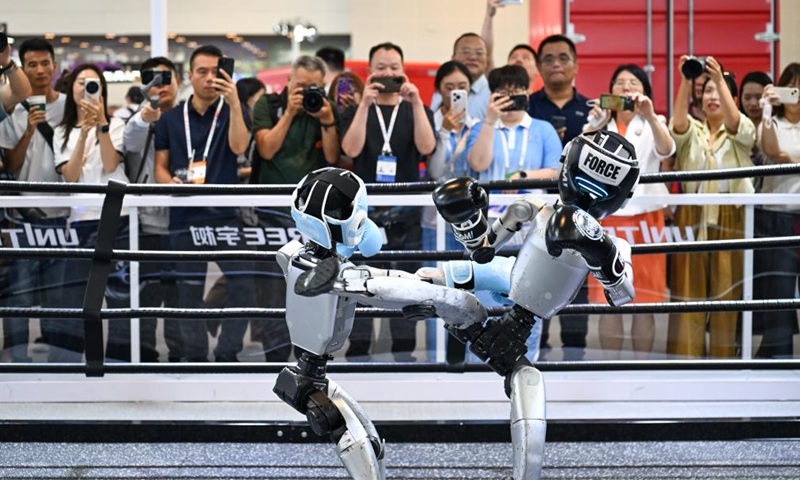
Chinese robot company Unitree Robotics held an online investor meeting on Friday for its initial public offering (IPO) on the Shanghai Stock Exchange's STAR Market, with Unitree founder Wang Xingxing saying the firm will continue to advance key software and hardware technologies and explore a broader range of product forms and models.
The company is set to become China's first publicly listed humanoid robot maker, representing an important milestone not only for Unitree itself but also for China's booming robotics industry. Greater access to capital will further accelerate technological innovation and promote the high-quality development of the robotics industry, an expert noted.
Speaking at the online investor meeting, Unitree founder Wang Xingxing said the firm will continue to advance key software and hardware technologies, including embodied AI foundation models, scenario-based data collection and analysis, reinforcement learning, embodied robot models, in-house development of core components, and high-performance actuators.
Wang revealed that the company is also actively exploring a broader range of product forms and models, including humanoid robots, quadruped robots and mecha robots, with the aim of enabling robots to take on physically demanding and high-risk tasks, freeing up human creativity and advancing robotics technology for the benefit of society.
Talking about the potential for the robotics industry, Wang said multiple factors are driving market demand, including an aging population, rising labor costs and growing demand for higher productivity and a better quality of life.
Against this backdrop, high-performance general-purpose robots capable of assisting humans with a wide range of tasks are emerging as an important solution to labor shortages and productivity bottlenecks, pointing to vast market potential, Wang noted.
Since its establishment, Unitree has focused on the research, development, production and sales of high-performance general-purpose humanoid robots, quadruped robots, robotic components and embodied AI models.
Reviewing the company's performance, Wang said his company has recorded steady growth in recent years. In 2025, while its net profit excluding non-recurring items grew rapidly, the company also ranked first globally in humanoid robot shipments.
Ahead of the roadshow, Unitree unveiled the pricing of its IPO and the results of its strategic placement. The company announced on Thursday that its IPO on the STAR Market was priced at 150.80 yuan per share.
Unitree will issue about 40.45 million shares, accounting for 10 percent of its total shares after the offering. The IPO is expected to raise about 6.1 billion yuan, exceeding its previously planned fundraising target of 4.2 billion yuan.
Unitree has attracted significant market attention and is expected to become the first humanoid robot company listed on China's A-share market, Liu Dingding, a veteran industry analyst, told the Global Times on Friday, noting that the company's upcoming listing would mark an important milestone not only for the company but also for China's robotics industry, which is accelerating its commercialization and market-oriented development.
More importantly, for Unitree, tapping the capital market will provide stronger support for sustained R&D investment and capacity expansion, Liu said, adding that "greater access to capital could significantly shorten R&D and market validation cycles that might otherwise take three to five years, further enhancing the global competitiveness of China's robotics industry."
The company is well aware that its current achievements are only a starting point, said Wang at Friday's roadshow. The embodied AI industry is still at an early stage of development, similar to the early days of home appliances and personal computers, and further progress will require joint efforts across the industry, he said.
Founded in 2016, Unitree mainly produces humanoid robots and quadruped robots. According to its prospectus, the company shipped more than 5,500 humanoid robots in 2025, ranking first globally. From 2023 to 2025, Unitree sold more than 33,000 quadruped robots, cementing its leading position in the global quadruped robot market.
The rapid growth of China's robotics industry is underpinned by the country's complete industrial chain and production capabilities. China is now home to more than 140 humanoid robot manufacturers, with annual shipments reaching 14,400 units, accounting for 84.7 percent of the global total, CCTV News reported. In other words, roughly eight out of every 10 humanoid robots shipped worldwide come from China.
。
Current article:http://3u891y.senbatuqiuzhuanlanrilao.sbs/ysk/xedg.html
Published on:02:07:03